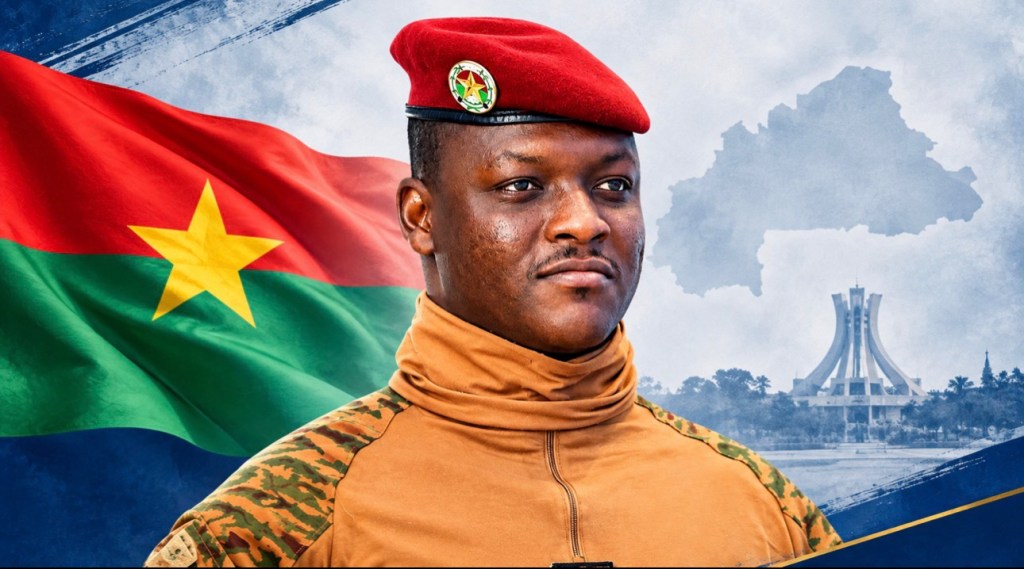
On 28 September 2026, Captain Ibrahim Traoré inaugurated Burkina Faso’s first gold refinery in Ouagadougou. Built for about 11 billion CFA francs (roughly 20 million dollars) by the state with domestic private investors, Raffinor-BF can process 164 tonnes of gold a year. The country produced more than 94 tonnes of gold in 2025, which makes it one of Africa’s leading producers. “We want to refine all our metals here,” Traoré said at the opening.
What has been built
The refinery is part of a wider effort to keep more of the country’s mineral wealth at home. Since taking power in 2022, Traoré’s government has revived the state mining company SOPAMIB and nationalized several foreign-owned gold mines. Six of the country’s 15 industrial mines are now domestically owned, three by the state and three by Burkinabè private companies. In 2024, authorities suspended exports of gold from informal mining in order to organize the sector. The government has also pushed to revive local industry, from cotton and tomatoes to textiles, and with Mali and Niger it created the Alliance of Sahel States. Its approach does not mean isolation: the country continues to work with the IMF under a programme approved in 2023. The idea behind all of this, that a country should benefit first from what lies under its soil, is one that many Africans share.
Development and democracy
For many people across Africa, elections have come and gone while little changed in daily life. Leaders were chosen at the ballot box, yet schools, hospitals and wages stayed the same, and key decisions about mines, debt and trade were often shaped far from home. A democracy that exists only on election day can sound hollow to those living in it. A different view holds that democracy cannot stand on broken institutions: courts, schools, a productive economy and a state that controls its own resources are the foundation that makes a vote meaningful. Supporters of state-led development often point to China, where decades of institution-building and growth lifted hundreds of millions of people out of poverty. Critics respond that China’s model has come with strict limits on political freedoms, which is why the lesson must be drawn carefully.
Democracy as a struggle
We believe in a third idea. Democracy is not only an election or only a set of institutions. It is a continuing struggle for people to be heard, to speak without asking permission, to organize, to question those in power, and to enjoy basic freedoms. Reform of the state and the freedom of its citizens are not rivals, and each makes the other stronger.
This is the test for Burkina Faso. Parties were dissolved in January 2026, and the transition has been extended to 2029. The UN human rights chief has urged a reversal, and rights groups report that many civil society organizations have been suspended or dissolved. Our hope is that the work of rebuilding the economy will make room for citizens’ voices, not close it, because development that people cannot discuss is development they cannot fully own.
Our view is simple. Africa should reject a democracy that is only a ritual, and also reject any path that asks its people to wait for their freedoms. Sovereign wealth, strong institutions, free voices and real development should grow together.
Sources: international news reporting; International Monetary Fund; United Nations.



Leave a Reply