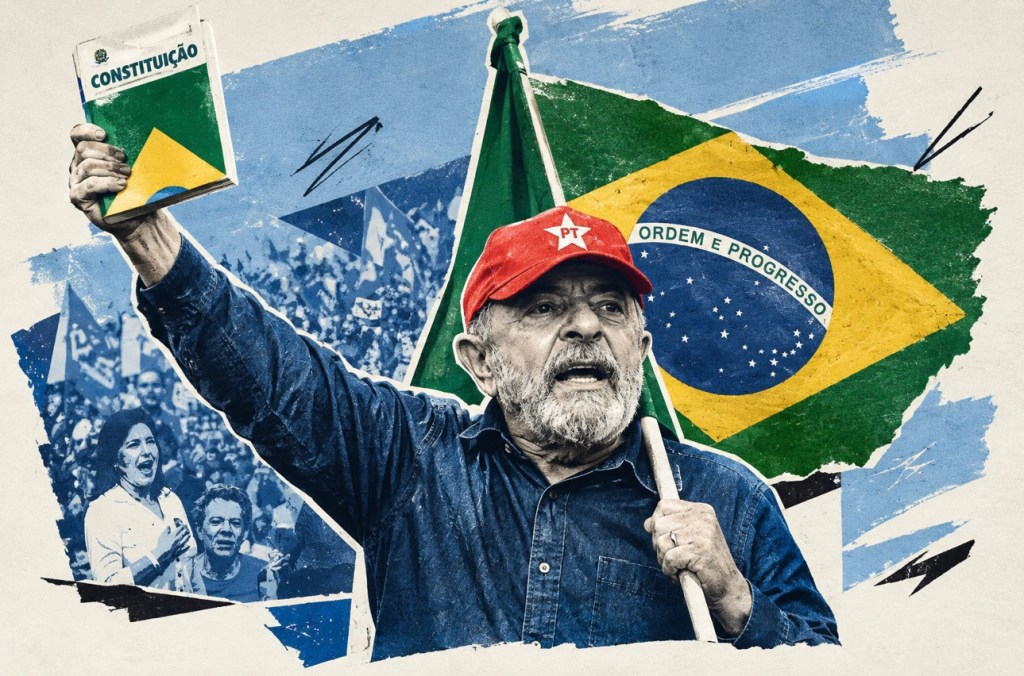
Brazilian President Luiz Inacio Lula da Silva has won a fourth non-consecutive term after a closely fought runoff on 25 October. According to official results from the Superior Electoral Court (TSE), Lula received 51.79 percent of the vote, or 64,256,232 votes, against 48.21 percent, or 59,826,041 votes, for Senator Flavio Bolsonaro. Flavio Bolsonaro had finished first in the opening round three weeks earlier, and has said he does not accept the result and will seek to have the vote annulled.
Echo of Freedom does not endorse parties or candidates. We follow this election because its themes are ones we work on every day: democratic institutions, human rights and the climate.
Democracy and sovereignty
The campaign took place in the shadow of the 8 January 2023 attacks on Brazil’s government buildings, which human rights groups described as the largest assault on democracy since the end of the military dictatorship. Former president Jair Bolsonaro, Flavio’s father, is serving a 27-year sentence for attempting a coup to block Lula’s inauguration. Lula’s campaign focused on Brazilian sovereignty, as he accused Washington of trying to influence the vote amid US tariffs and sanctions on Brazilian officials. His opponents argued that voters wanted change. In his victory speech, Lula called the result a defeat of denialism and lies.
Human rights record
Since 2023, Lula’s government has created ministries for Indigenous Peoples, Racial Equality and Human Rights. It also declared an emergency in Yanomami territory, where illegal mining had caused a humanitarian crisis. Critics say the response has not been enough. Some Indigenous advocates and commentators argue that the Yanomami’s situation remains precarious and that Lula’s governments have also favored agribusiness interests.
Climate and the Amazon
Satellite data showed Amazon deforestation at an 11-year low in the 12 months to July 2025, and the Climate Observatory reported a 16.7 percent fall in Brazil’s emissions in 2024, the sharpest in 15 years. Lula has pledged zero deforestation by 2030, and Brazil hosted the COP30 climate summit in Belem. At the same time, environmental groups have criticized his support for Petrobras drilling near the mouth of the Amazon River and for a highway built through rainforest ahead of the summit. Lula argues that oil revenue can finance the green transition.
What to watch
The coming weeks will test how the result is accepted and whether Brazil’s institutions hold. Over the next term, observers will also look at whether the government can match its environmental and human rights commitments with action on the ground, in a country almost evenly divided.
Sources: Superior Electoral Court (TSE) results via Reuters; NPR, 25 October 2026; France 24, 26 October 2026; ABC News Australia, 26 October 2026; Conectas; Climate Observatory; Brazilian government deforestation data (INPE).




Leave a Reply